A washing machine can spin for an hour without you noticing. A phone call in the next room, not even a loud one, can stop you reading a single line. The difference is the words, since volume matters little.
Why voices are harder to ignore
Psychologists call it the irrelevant speech effect: speech you are not trying to listen to still gets processed, and it interferes most with tasks built on words and order, such as reading, writing and remembering lists. A washing machine has no words and a phone call is full of them.
What a 2013 office study found
Jahncke, Hongisto and Virjonen tested 47 people on office-type tasks while background speech played at six levels of intelligibility, meaning how easy it was to understand. Memory for words was hit hardest, and performance started to drop even when the speech was only partly understandable. How much of the speech you could follow mattered more than how loud it was.
How offices use sound masking
Open-plan offices don’t try to make the room silent. They add a steady, low background sound so that nearby conversations get harder to follow. The words blur, and blurred words are much easier to ignore.
Doing it at home, in a café or in an open office
Headphones or speaker
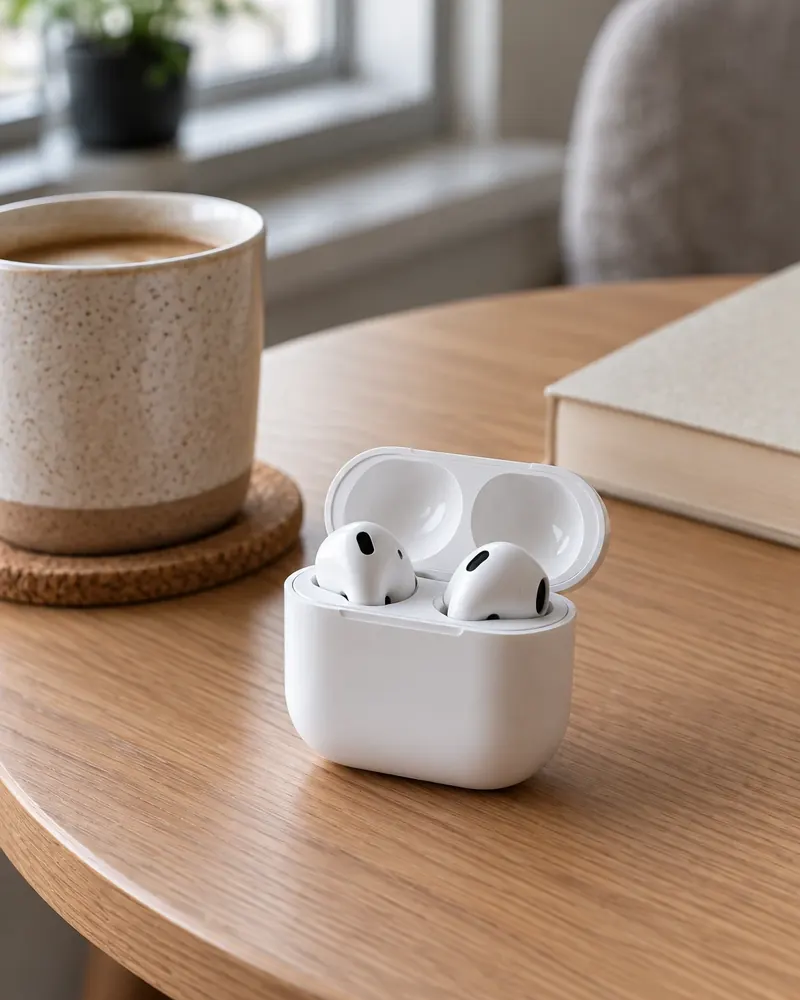
When the voices are close, headphones help most. Noise-cancelling ones take out the steady hum, and your focus sound takes the edge off the voices.
What I use every day
Bose QuietComfort Headphones
With noise cancelling on, a soft focus sound at low volume is usually enough to blur voices in the next room.
- Strong noise cancelling
- Comfortable for long blocks
- Pricier than earbuds
Which sound and how loud
Start at a low volume and raise it only until the words blur. You should still hear that people are talking without being able to follow what they say, and going louder adds little.
Rain is easy to live with for hours, pink noise is smooth and works as an all-rounder, and brown noise is deep and soft for long sessions.
Plan tasks around the noise
Keep reading and memorizing for the quiet hours, and use the noisy ones for email, admin and anything with little text.
Natural sounds as maskers
In a small pilot presented in 2015, a mountain-stream sound worked well as a masker in attention tasks. It involved only 12 people, so the evidence is early.
Questions people ask
What is the best noise to block out talking?
A steady sound you find comfortable, such as rain, pink or brown noise, at just enough volume to blur the words.
How do I concentrate in an open office?
Headphones, a steady sound at low volume, and word-heavy tasks saved for quieter moments.
How do I study at home when my family is loud?
Mask the voices with a steady sound, and do your reading and memorizing in the quietest hours of the day.
If it’s song lyrics that distract you, read what lyrics do to your reading.