Why Your Focus Doesn’t Come Back After a Meeting
You close the call, open your real work — and your head is still in the meeting. It has a name: attention residue. And the research-backed fix takes about 30 seconds.
This post contains affiliate links. If you buy through them I may earn a small commission, at no extra cost to you.
The call ends. You close the tab. You open the document you actually need to work on.
And for the next twenty minutes, your brain is still in the meeting. Replaying what someone said. Wondering if you should have replied to that message. Thinking about the thing you didn’t finish before the call started.
You’re not bad at focusing. You’re carrying attention residue.
What attention residue is
The term comes from organizational researcher Sophie Leroy. In a set of experiments published in 2009, she found that when people switch from one task to another, part of their attention stays with the first task — and their performance on the new task drops.
The effect was stronger when the first task was left unfinished. Which, if you think about your average workday, is almost always.
Every open loop keeps a little of your attention. Five open loops, and you’re working with what’s left.
The 30-second fix
In a later study, Leroy and Theresa Glomb tested something very simple. Before switching tasks, some people wrote a short “ready-to-resume” plan: where they stopped, and what they’d do next.
Those people carried less residue and did better on the next task.
It works because the unfinished task no longer needs to be held in your head. It’s written down. Your brain can let go of it.
How to write a ready-to-resume note
Two lines. That’s all.
- Where I stopped: “Halfway through the budget section. Numbers for Q3 are in.”
- What’s next: “Add Q4 estimates, then check totals.”
Be specific enough that tomorrow-you could pick it up cold. “Continue budget” doesn’t count.
Where to use it
- Before a meeting. Two minutes before the call, stop and write the note for what you were doing. You’ll come back faster.
- After a meeting. Write one line for any follow-up you’re carrying out of the call. Then close it.
- At the start of every Pomodoro break. Especially when the timer cuts you off mid-thought. This is the habit that makes shorter rhythms much easier to live with — more on that in why Pomodoro isn’t as proven as you think.
- At the end of the day. The last note of the day is the first thing you read tomorrow.
Keep the notes somewhere boring
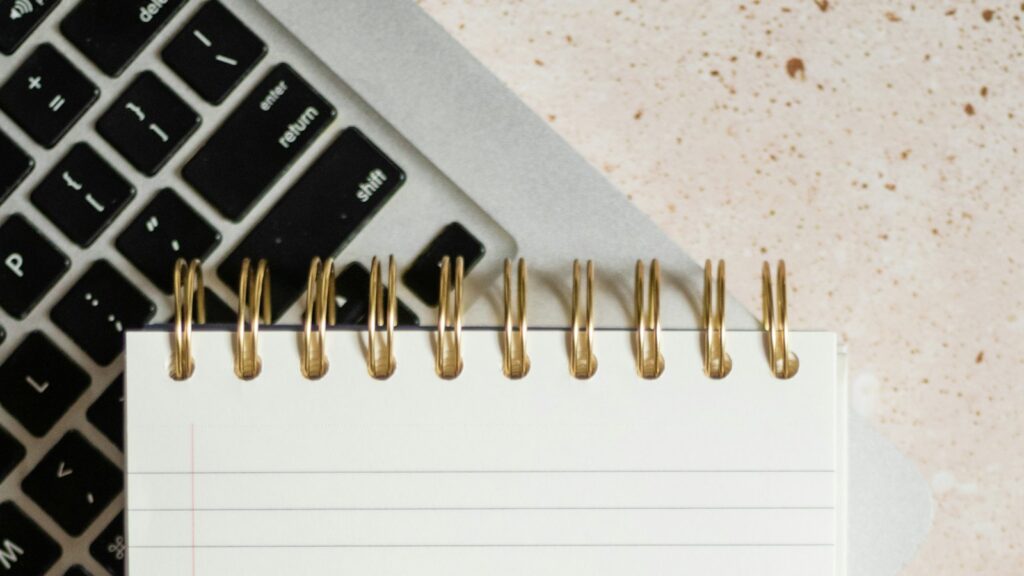
Resist the urge to build a system. A single note on your desktop works. So does a small spiral notepad next to your keyboard — arguably better, because writing on paper doesn’t open a door to your inbox.
Give your brain a clean start
Residue fades faster when the next block starts clearly. A steady sound and a timer help with that: they mark the difference between “the meeting” and “now I’m working”.
Next time a call ends, try this: write the two lines, close everything else, and start one 25-minute block. You’ll be surprised how quickly your head comes back.